


Projects and wonders - Architecture and design at the Château de Pau (1820–1920)
On the eve of major restoration work scheduled to begin at the end of 2026 on the interior of the Château de Pau, this exhibition invites visitors on a dual exploration.
The first approach is that of the architects, the men of art. Several figures deserve to be highlighted, such as Vincent Latapie, the local representative of Parisian architects under Louis-Philippe and until the beginning of the Second Empire, and Auguste Lafollye (1828–1891), architect of the palace from 1864 to 1872, who was responsible for completing most of the transformations to the former residence of Gaston Fébus, Marguerite d'Angoulême and Henri IV, and who recounted this ambitious undertaking in 1882 in a carefully documented work. Henri Geisse, who was in charge of the Château de Pau at the beginning of the 20th century, still drew inspiration from this master in 1919.
Some projects were of particular importance, whether they were completed, such as the large entrance portico designed by Gabriel Ancelet in 1862, or merely proposed, such as the beautiful Renaissance-style Italianate façade at the western end of the monument, which never saw the light of day.
This historical and structural interpretation is combined with an aesthetic investigation, which takes a broader look at the flow of visitors, well represented by the views of artists and enthusiasts. All of them are attentive to the successive restoration campaigns unfolding before their eyes. In 1855, architect Charles Vasserot, as a simple traveller, hastened to make sketches.
In 1858-1859, art lover Louis-Marie-Félix Laurent-Atthalin imagined, in a setting he described in meticulous detail, a dignified, courteous and colourful atmosphere, whereas under the July Monarchy, when a vast programme of works was underway, the painter Justin Ouvrié depicted the current main courtyard as being in a state of skilful and mysterious decay.
In the art of interpretation, writing and drawing come together, coexisting in certain publications: early visitor guides, entitled historical souvenirs or panoramas, then elegant popularisations of France's main monuments.
The dialogue between architecture and design continued throughout the 19th century and into the 20th century, giving rise to a memorial conception of historical monuments that increasingly emphasised their authenticity.
Through a series of highly evocative photographs that emphatically highlight the value of this new artistic expression, the successive construction projects at the Château de Pau bear witness to the evolution of designs and techniques, but also to the permanence of certain guiding principles.
The investigation opened by this exhibition-dossier is based on the collections preserved at the National Museum and Estate of the Château de Pau, with the exception of one loan from a private individual, whom we would like to thank.
It does not claim to follow step by step the course of the restoration of the Château Henri IV, which other studies and exhibitions will undoubtedly shed more light on in the years to come. Above all, it invites visitors to explore the concept and practice of drawing, which, whether as a project or a view of an existing state, seeks to bring the former palace to life before, during and after its restoration.
À découvrir
Harmonisation paysagère de l’ancienne pépinière
Tours in English
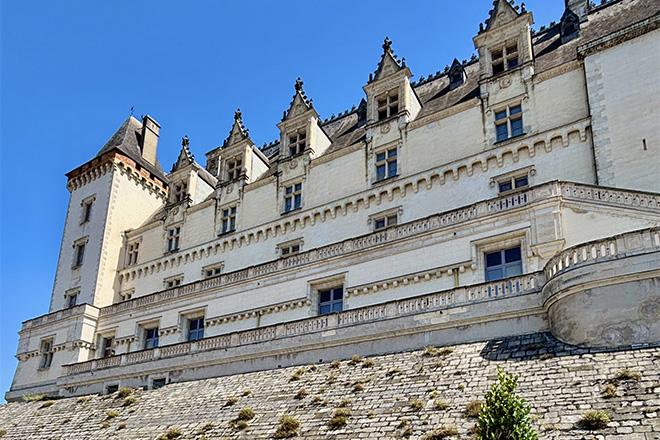
¡Visitas comentadas del castillo en español en diciembre!