


Louvre Casting Workshop, Funerary Mask of King Henri IV, plaster, 19th century // Anonymous, Portrait of a Man in Bust, oil on canvas, 17th century
Exhibition dossier
At his death, it was customary to embalm the king in order to preserve his body and display it during the funeral ceremonies. A death mask was then made to preserve the deceased’s features as faithfully as possible. The oldest known example of Henry IV’s death mask is kept in Paris. Some researchers believe that it was made following his assassination in 1610, while others consider it to be of more recent date. Yet another tragic episode in French history may have given rise to a death mask: the exhumation of the royal remains from the Basilica of Saint-Denis during the French Revolution in 1793, an operation intended to dispose of the remains of the dead, who had until then embodied France and the monarchy.
In the crypt, the process began with the coffin of Henry IV, who died at the age of 57. After the coffins were opened, the corpse was exposed and desecrated… Tradition has it that an artist made a mould of the king’s remarkably well-preserved face.
According to the myth of Dibutades, recounted by Pliny the Elder, the daughter of a sculptor from Corinth, Greece, wishing to preserve the image of her beloved as he was leaving on a long journey, is said to have traced the outline of his profile in shadow. Her father then covered the outline with clay, thereby creating the first portrait. The myth thus brings together art and memory, art and emotion.
This barely recognisable male portrait was discovered by chance during a restoration. It was found on the back of a wooden panel painting. Forgotten for many years, it is now being presented to visitors for the first time since its removal in 2011.
Memories, memories

One of the things art can do is help us remember people who have died. But this portrait of a gentleman also reminds us that works of art are fragile and can sometimes disappear.
Most paintings, photographs and sculptures are made while people are still alive. But some are created just after someone dies, to keep one last memory of them. This is the case with this mould, which reproduces the face of Henry IV after he was assassinated.
À découvrir
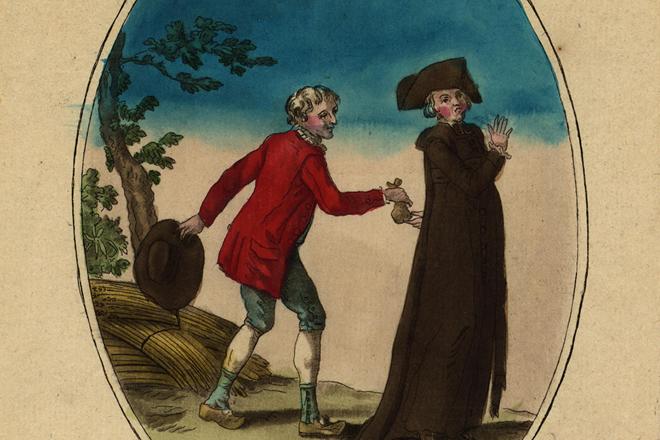
L’intégration fiscale des États du Béarnais au royaume de France aux 17e et 18e siècles
Carnaval royal
Youpi ! C'est carnaval !